
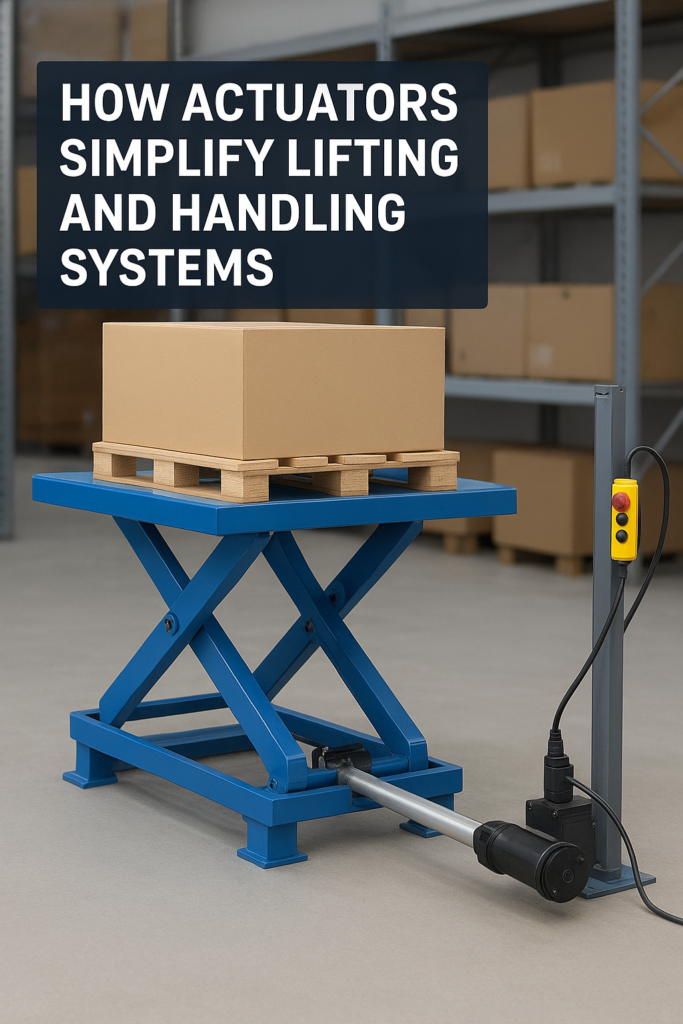
In industries where heavy loads are moved daily, lifting and handling systems are essential. From warehouses to assembly lines, these systems reduce physical strain on workers and increase overall efficiency. But what makes modern lifting solutions even more effective is the integration of electric linear actuators. They simplify operations, improve safety, and provide precise control that traditional methods struggle to match.
Why Lifting and Handling Needs Actuators
Traditional lifting systems often depend on hydraulics, pneumatics, or manual effort. While they get the job done, they come with challenges such as:
- High maintenance (oil leaks, air pressure loss)
- Limited precision and repeatability
- Risk of unsafe operation if not monitored carefully
Electric linear actuators solve these issues by offering clean, controlled, and reliable motion for lifting and handling.
How Actuators Simplify Lifting and Handling
1. Precise Positioning
Actuators allow smooth and accurate vertical or horizontal movement. For example, in pallet lifters, they ensure exact placement at the required height.
2. Load Handling Made Easy
With actuators, heavy objects can be lifted or lowered with minimal effort. The push and pull force of electric actuators is ideal for applications where consistent lifting strength is needed.
3. Enhanced Safety
Actuators prevent sudden drops or jerks. They can be fitted with limit switches, overload protection, and sensors to ensure safe handling.
4. Low Maintenance Operation
Unlike hydraulic cylinders, actuators require no oil, pumps, or hoses—resulting in a maintenance-free lifting solution.
5. Automation-Friendly
Electric actuators can be integrated with PLC systems, IoT devices, and smart controls, enabling remote and automated lifting operations.
Applications in Lifting & Handling Systems
- Scissor lifts – for height adjustment in assembly lines
- Material handling carts – for lifting loads in warehouses
- Workstations – adjustable tables and platforms
- Automated storage systems – lifting goods in and out of racks
- Robotic arms – precise lifting and handling of components
Benefits to Industries
- Increased productivity by reducing manual labor
- Improved worker ergonomics and comfort
- Higher accuracy and repeatability in handling tasks
- Lower operational and maintenance costs
- Safer working environment
Conclusion:
Electric linear actuators are transforming lifting and handling systems. Their precision, safety, and easy integration with automation make them a must-have solution for industries aiming for higher efficiency and smarter operations.
FAQ
1. What is an electric linear actuator in lifting systems?
An electric linear actuator is a device that converts electrical energy into linear motion to lift, push, or pull loads. In lifting systems, actuators provide controlled movement, allowing machines to raise or lower materials accurately without relying on hydraulic oil or pneumatic pressure.
2. How do electric linear actuators improve lifting and handling operations?
Electric linear actuators improve lifting and handling operations by providing precise motion control, reliable load movement, and automated functionality. They help reduce manual effort, increase operational efficiency, and ensure safer handling of heavy loads in industrial environments.
3. Why are electric actuators better than hydraulic lifting systems?
Electric actuators offer several advantages over hydraulic systems, including lower maintenance, cleaner operation, higher precision, and easier integration with automation systems. Unlike hydraulics, they do not require oil, pumps, or hoses, which reduces leakage risks and maintenance costs.
4. What industries use electric linear actuators for lifting and handling?
Electric linear actuators are widely used in industries such as manufacturing, logistics, warehousing, automotive, robotics, and material handling. They are commonly integrated into lifting equipment, automated storage systems, and assembly line workstations.
5. What types of lifting equipment use electric actuators?
Electric actuators are used in several lifting systems, including scissor lifts, adjustable workstations, pallet lifters, automated storage systems, robotic arms, and material handling carts. These applications benefit from the actuator’s smooth and controlled motion.
6. Are electric linear actuators safe for heavy load lifting?
Yes, electric linear actuators are designed with built-in safety features such as overload protection, limit switches, and position sensors. These features prevent sudden movements or drops, ensuring safer lifting operations for workers and equipment.
7. How do actuators help improve worker ergonomics?
Actuators allow workstations, platforms, and lifting systems to be adjusted automatically to comfortable heights, reducing the need for manual lifting or awkward postures. This helps minimize workplace injuries and improves overall worker productivity.
8. Can electric actuators be integrated with automation systems?
Yes, electric actuators can be easily integrated with PLC controllers, industrial automation systems, and IoT-enabled devices. This allows industries to automate lifting operations, monitor performance remotely, and optimize material handling processes.
9. What maintenance is required for electric linear actuators?
Electric linear actuators require minimal maintenance compared to hydraulic or pneumatic systems. Since they do not use oil or compressed air, regular checks typically involve inspecting electrical connections, mounting brackets, and ensuring proper load usage.
10. How do electric actuators increase productivity in lifting applications?
Electric actuators increase productivity by enabling faster, more precise, and repeatable lifting operations. Automated lifting reduces manual labor, speeds up material handling processes, and helps maintain consistent performance across industrial workflows.

Wow, Actuators are doing so many things in material handling.
Offering a diverse selection of Actuators, it caters to both comfortability and innovation. There is a Application for everyone.