
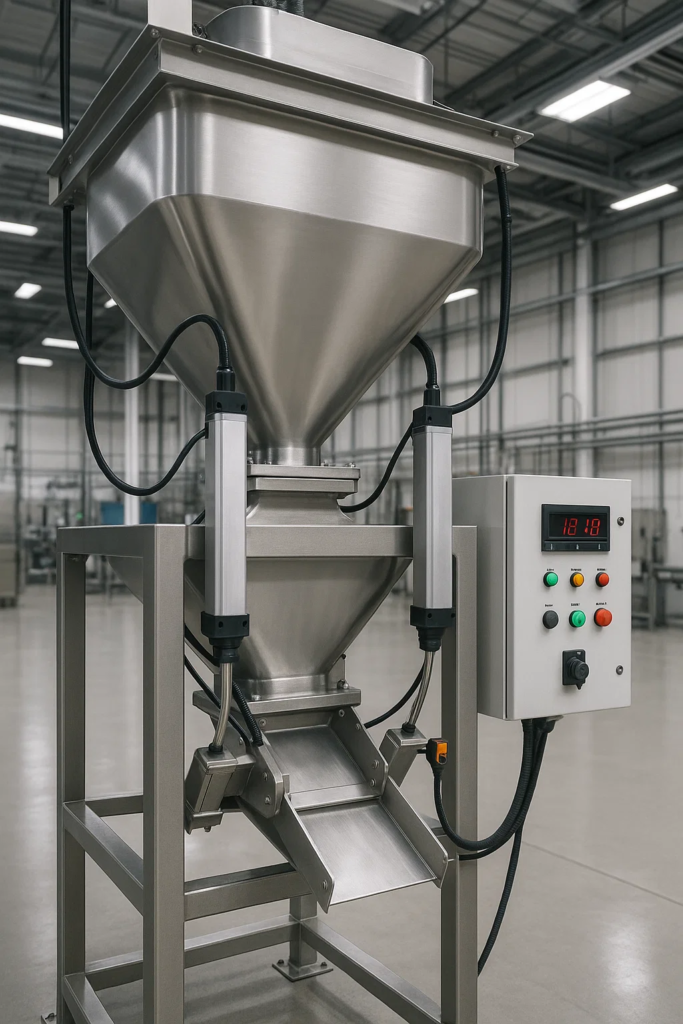
In modern industries, automation is playing a crucial role in enhancing productivity, precision, and safety. One of the widely adopted innovations is the Linear Actuator based Automatic Hopper Machine Controller System, designed to simplify bulk material handling operations. Whether it is in agriculture, food processing, chemical plants, or construction, hopper systems are essential for storing and dispensing raw materials. By integrating electric linear actuators, these machines achieve smooth, accurate, and fully automated control.
Why Automation in Hopper Systems?
Traditional hopper machines require manual monitoring and mechanical handling, which can lead to:
- Inconsistent material flow
- Higher labor costs
- Spillage and wastage
- Safety hazards in bulk handling
Automating hopper systems eliminates these challenges by offering precise motion control and programmable operation.
Role of Electric Linear Actuators
Linear actuators provide the driving force for opening, closing, and adjusting hopper gates. With the help of an integrated control system, actuators can:
- Automate gate movement for consistent material flow.
- Adjust flow rate based on sensor feedback.
- Ensure safety with overload protection and limit switches.
- Reduce downtime with reliable, maintenance-free operation.
Unlike pneumatic or hydraulic systems, electric actuators are energy-efficient, quieter, and cleaner, making them suitable for industries that require hygiene and precision.
Advantages of the System
- Precision Handling – Controlled dispensing prevents material loss.
- Reduced Human Intervention – Fully automated operation minimizes manpower.
- Energy Efficiency – Consumes less power compared to traditional hydraulic/pneumatic systems.
- Programmable Control – Integrated with PLC/IoT systems for smart operation.
- Durability & Safety – Designed to handle heavy-duty cycles without frequent maintenance.
Applications Across Industries
- Food Industry – Controlled dispensing of grains, flour, or sugar.
- Pharmaceuticals – Accurate material handling in clean environments.
- Agriculture – Fertilizer and seed hopper systems.
- Construction – Cement, sand, or aggregate distribution.
- Chemical Plants – Handling powders, pellets, and chemicals safely.
Conclusion
The Linear Actuator based Automatic Hopper Machine Controller System is a reliable solution for industries looking to optimize their material handling process. With precision, automation, and safety at its core, this system reduces human effort while ensuring consistent performance. By switching to electric actuator-driven automation, industries can achieve better efficiency, lower costs, and sustainable operations.
FAQ
1. What is a Linear Actuator Based Automatic Hopper Machine Controller System?
A Linear Actuator Based Automatic Hopper Machine Controller System is an automated material handling solution that uses electric linear actuators to control the opening, closing, and adjustment of hopper gates. This system ensures precise dispensing of bulk materials such as grains, powders, chemicals, or construction materials with minimal manual intervention.
2. How does a linear actuator work in a hopper machine?
A linear actuator converts electrical energy into linear motion to control the hopper gate. When the actuator receives a signal from the controller or PLC, it moves the gate to open or close, regulating the flow of materials accurately and consistently.
3. Why are electric linear actuators preferred over hydraulic or pneumatic systems?
Electric linear actuators are preferred because they are energy-efficient, require less maintenance, operate quietly, and provide precise motion control. They also eliminate the need for oil or compressed air systems, making them cleaner and more suitable for industries like food processing and pharmaceuticals.
4. What are the main benefits of automating hopper systems?
Automating hopper systems improves productivity and operational efficiency. Key benefits include consistent material flow, reduced labor costs, minimized spillage and wastage, improved safety, and better process control through programmable automation.
5. Which industries use automatic hopper machine controller systems?
Automatic hopper machine controller systems are widely used in industries such as food processing, agriculture, pharmaceuticals, construction, and chemical manufacturing where controlled dispensing and bulk material handling are essential.
6. Can hopper automation systems be integrated with PLC or IoT platforms?
Yes, modern hopper automation systems can easily integrate with PLCs and IoT-based monitoring platforms. This allows real-time control, remote monitoring, and data-driven decision-making to optimize material handling processes.
7. How does automation improve safety in hopper systems?
Automation reduces the need for manual handling near heavy materials and moving equipment. Features such as limit switches, overload protection, and sensor-based monitoring help prevent accidents and ensure safe operation.
8. What types of materials can be handled by automated hopper machines?
Automated hopper machines can handle a wide range of materials including grains, flour, fertilizers, powders, pellets, chemicals, sand, cement, and other bulk materials depending on the hopper design and actuator capacity.
9. Are electric linear actuators suitable for heavy-duty industrial applications?
Yes, industrial-grade electric linear actuators are designed to handle heavy loads and continuous operation. They offer durable construction, precise control, and reliable performance in demanding industrial environments.
10. How does a linear actuator improve material flow control in hopper systems?
A linear actuator allows precise positioning of the hopper gate, enabling controlled dispensing of materials. This ensures consistent flow rates, reduces material loss, and improves overall efficiency in production and processing systems.

Nice stuff