
Cameras often need to move up and down. Manual adjustment is slow and unstable. Therefore, many systems use linear actuator. A linear actuator moves the camera smoothly. As a result, the shot stays stable. This improves video and image quality. Moreover, these systems work well in many industries. They are simple, safe, and reliable.
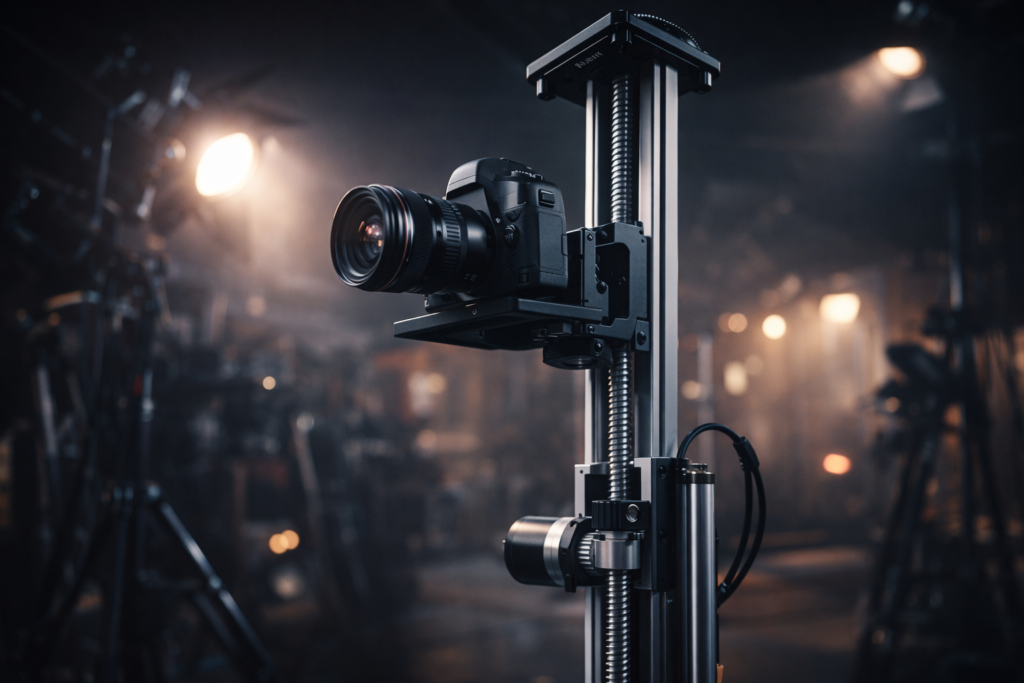
Application of Lifting Device in Camera
First, camera lifting devices help change height easily. They remove the need for manual handling. For example, robots use camera lifts to see objects better. The camera moves based on the task. In filmmaking, camera lifts create smooth vertical shots. Therefore, videos look more professional. In addition, studios and home theaters use lift systems.
The camera stays hidden when not in use. It appears only when needed. Likewise, survey and mapping systems need fixed camera heights. Automated lifting improves accuracy.
Introduction to Lift Shooting
Lift shooting means moving the camera vertically while recording. However, hand movement causes shaking. This affects video quality. Therefore, automated lift shooting is preferred. Linear actuators control the movement. As a result, shots are smooth and repeatable. Moreover, setup time is reduced.
How a Linear Actuator Works in Camera Lifting
The working process is simple. First, an electric motor rotates. Next, gears slow the speed and add force. Then, the lead screw starts turning. After that, a nut moves along the screw. The camera mount connects to this nut. As a result, the camera moves up or down. If the motor direction changes, the movement reverses. Therefore, one system handles both directions.
Second, the Salient Features of the Lift Lens
A good camera lift system has key features.
Load capacity is very important. The actuator must carry the camera safely.
Stroke length decides how far the camera moves. It must match the required height.
Smooth movement prevents camera shake. Silent motors are better for studios.
Control options add flexibility. Users can choose switches or remote controls.
Safety features protect the system. Limit switches stop over-movement.
Types of Camera Lifting Systems
There are two main system types.
Single actuator systems are simple. They work well for small cameras.
Synchronized systems use more actuators. They move together at the same speed. Therefore, they suit larger setups.
Key Considerations for Building a Camera Lift
Before building a system, plan carefully. Choose the right actuator first. Check load, stroke, and speed. Next, mount the system firmly. Proper alignment is important. Then, connect the control system. Finally, test safety limits. Following these steps ensures stable operation.
Conclusion
Linear actuators are ideal for camera lifting. They provide smooth and controlled motion. As a result, they are used in robots, studios, and filming. With proper design, the system works safely and efficiently.
0 responses to “Professional Camera Lift Up & Down Using a Linear Actuator”