
As healthcare environments continue to evolve, electric patient lifts have become essential equipment in hospitals, rehabilitation centers, nursing homes, and even home-care settings. The video you shared clearly demonstrates how modern patient lift systems rely on electric actuator to ensure safe, smooth, and controlled patient handling. But why are electric actuators so critical in patient lifts? Let’s explore how they work, their key benefits, and how the same actuator technology powers multiple medical and mobility solutions.
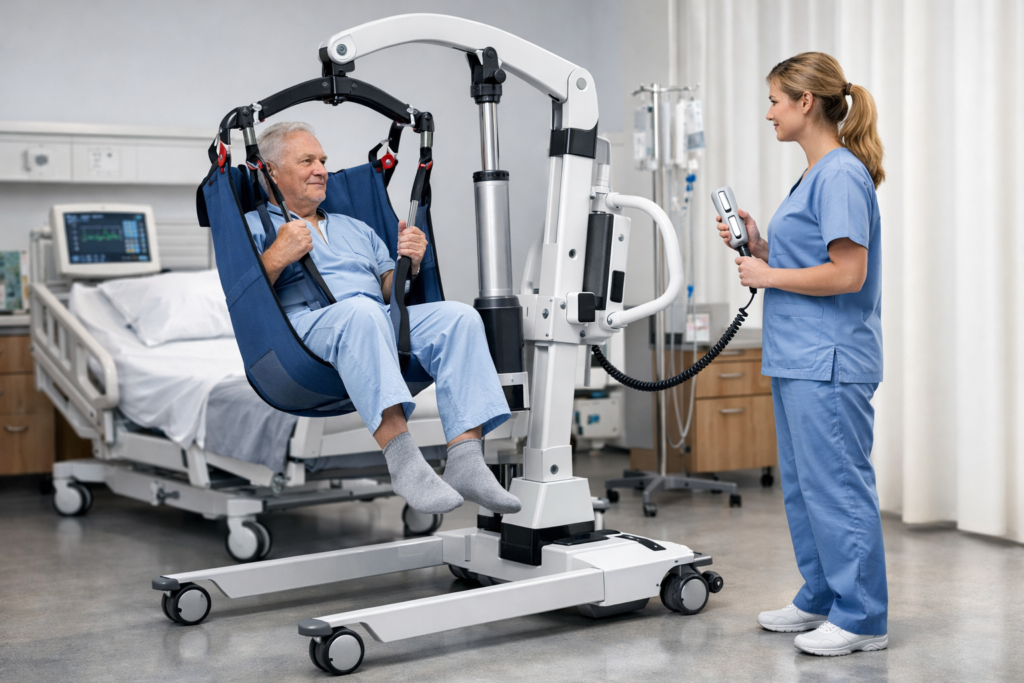
The Role of Electric Actuator in Electric Patient Lifts
Electric patient lifts need electric actuators because they convert electrical energy into precise linear motion, enabling controlled lifting, lowering, and positioning of patients. Unlike manual or hydraulic systems, electric actuators deliver consistent force, accuracy, and safety, which are crucial when handling vulnerable patients.
As shown in the application video, the actuator ensures:
- Smooth vertical lifting
- Stable horizontal transfers
- Controlled speed during movement
- Reliable operation under varying loads
This makes patient transfers easier, safer, and more dignified for both patients and caregivers.
Key Functions and Benefits of Electric Actuator in Patient Lifts
1. Smooth and Precise Lifting Motion
Electric actuators provide gentle, jerk-free movement with soft start and soft stop functionality. This prevents sudden shifts that could cause discomfort, fear, or injury to patients—especially those with limited mobility or post-surgical conditions.
2. Reduced Physical Strain on Caregivers
Manual lifting is one of the leading causes of musculoskeletal disorders (MSDs) among healthcare workers. Electric actuators eliminate the need for physical force, significantly reducing caregiver fatigue, back injuries, and long-term health risks.
3. Enhanced Patient Safety
Modern actuators integrate multiple safety features, including:
- Overload protection to prevent excessive force
- Limit switches to avoid over-travel
- Emergency stop functions for instant control
These features ensure safe operation even in demanding healthcare environments.
4. Power Failure and Emergency Handling
Many electric actuators used in patient lifts include manual release or emergency lowering functions, allowing patients to be safely lowered during power outages—an essential requirement for critical care applications.
5. Greater Patient Independence
Electric actuators empower patients to adjust their own position in beds, chairs, or lifts using simple controls. This improves comfort, dignity, and independence while reducing dependency on caregivers.
6. Customization and Smart Control
Actuators allow programmable speeds, stroke lengths, and positions, enabling healthcare providers to tailor lifting and positioning to specific patient needs, weights, and conditions.
How Electric Actuator Works in Patient Lift
An electric linear actuator uses an electric motor to rotate a lead screw. This rotation moves a nut in a straight (linear) path, generating a controlled push or pull force.
This precise linear motion is what allows patient lifts to raise, lower, and position patients safely, smoothly, and reliably, as demonstrated in the video application.
Beyond Patient Lifts: Other Medical and Mobility Applications Using Electric Actuator
Electric actuators are not limited to patient lifts. The same technology supports a wide range of healthcare and assistive devices.
Electrically Adjustable Hospital and Home Care Beds
Electric actuators enable height adjustment, backrest tilt, and leg elevation, improving patient comfort, circulation, and caregiver access.
Motorized Lift and Recliner Chairs
In lift chairs, actuators assist patients in safely transitioning from sitting to standing, reducing fall risk and improving daily mobility.
Advanced Patient Transfer and Positioning Devices
Transfer boards, lateral transfer systems, and repositioning aids use actuators to ensure stable and controlled movement during patient transfers.
Electric Wheelchairs and Mobility Scooters
Actuators support seat lifting, reclining, footrest adjustment, and tilt functions, enhancing mobility and independence for users.
Smart Medical Monitoring and Assistive Systems
Electric actuators integrate with smart monitoring systems, enabling automated adjustments based on patient posture, pressure distribution, or caregiver commands.
Adjustable Bathtubs and Powered Shower Chairs
For safe bathing, actuators allow smooth height adjustment and tilt control, minimizing slip risks and making hygiene tasks safer for both patients and caregivers.
Conclusion
Electric patient lifts rely on electric actuators because safety, precision, and reliability are non-negotiable in healthcare applications. From smooth lifting and reduced caregiver strain to advanced safety features and emergency handling, electric linear actuators form the backbone of modern patient handling systems.
As clearly illustrated in the video application, electric actuators don’t just lift patients—they protect caregivers, enhance patient dignity, and enable smarter healthcare solutions across beds, chairs, wheelchairs, transfer devices, and bathing systems.
Investing in high-quality electric linear actuators means investing in safer, smarter, and more efficient patient care.
0 responses to “Why Electric Patient Lifts Need High Performance Electric Actuator”