
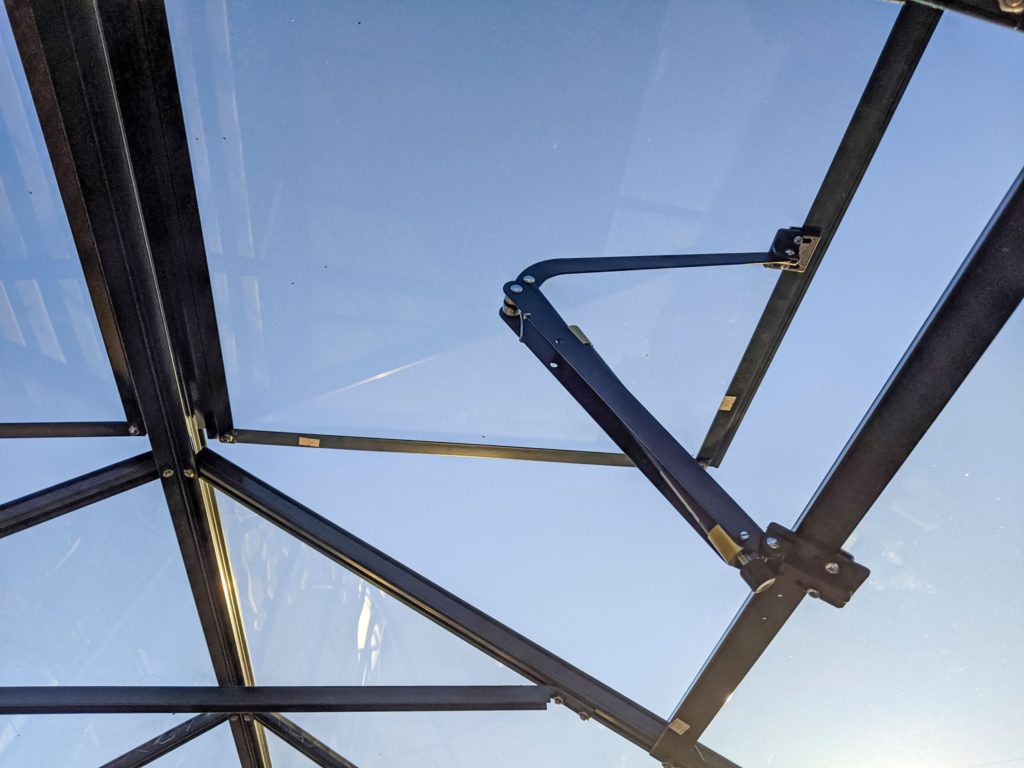
Greenhouse ventilation plays an important role in maintaining a suitable growing environment. Excess heat and humidity affect plant growth and reduce crop quality.
An automatic greenhouse roof vent using a linear actuator provides a simple way to control ventilation. The electric linear actuator opens and closes the roof vent with controlled movement, reducing the need for manual operation.
How Does a Greenhouse Roof Vent Linear Actuator Work?
A greenhouse roof vent linear actuator is mounted between the greenhouse frame and the movable roof vent.
When the actuator extends, it pushes the vent open. When it retracts, the vent closes.
The system can operate through:
- Manual switches
- Temperature sensors
- Humidity sensors
- Timers
- Automatic greenhouse control systems
This setup allows the roof vent to respond to changing greenhouse conditions.
Why Use a Linear Actuator for Greenhouse Ventilation?
An electric linear actuator provides controlled movement for greenhouse roof vents. It is suitable for applications where repeated opening and closing is required.
Key benefits include:
- Automatic ventilation
- Smooth vent movement
- Reduced manual work
- Easy electrical control
- Compact installation
- Adjustable stroke options
- Remote control integration
- Suitable for repeated operation
Temperature-Based Automatic Ventilation
Temperature control is one of the main applications of an automatic roof vent.
A temperature sensor monitors the greenhouse environment. When the temperature reaches a preset level, the control system activates the linear actuator.
The actuator extends and opens the roof vent. Hot air escapes through the opening, improving air circulation.
When the temperature decreases, the actuator retracts and closes the vent.
This creates an automatic ventilation cycle without continuous manual operation.
Humidity Control Using Linear Actuators
High humidity inside a greenhouse increases the risk of plant diseases.
A linear actuator-based roof vent system helps release humid air and introduce fresh air into the greenhouse.
A humidity sensor or greenhouse controller can trigger the actuator when humidity reaches a selected level.
This provides better control over the growing environment.
Components Required
A typical automatic greenhouse roof vent system includes:
- Electric linear actuator
- Greenhouse roof vent
- Mounting brackets
- 12V or 24V DC power supply
- Temperature sensor
- Humidity sensor
- Relay or actuator controller
- Limit switches
- Manual override switch
The exact components depend on the greenhouse size and ventilation requirements.
Choosing the Right Linear Actuator
Selecting the correct actuator is important for reliable roof vent operation.
Consider these factors:
Force
The actuator must provide enough force to move the roof vent against its weight, wind resistance, and mechanical load.
Stroke Length
Stroke length determines how far the roof vent opens. Select the stroke based on the required opening distance.
Speed
Select an actuator speed based on the required vent opening and closing time.
Voltage
12V DC and 24V DC actuators are common options for greenhouse automation.
Weather Protection
Greenhouse applications expose equipment to moisture, dust, and temperature changes. Select an actuator with suitable environmental protection for the installation location.
Duty Cycle
If the roof vent operates frequently throughout the day, choose an actuator designed for the required operating cycle.
Automatic Greenhouse Roof Vent Control
The linear actuator can connect to a control system for automatic operation.
For example:
Temperature rises → Sensor detects temperature → Controller activates actuator → Roof vent opens → Hot air escapes → Temperature decreases → Actuator closes roof vent.
You can also add manual control so the operator can open or close the vent when required.
Applications
A greenhouse roof vent linear actuator is suitable for:
- Commercial greenhouses
- Nursery greenhouses
- Vegetable cultivation
- Flower cultivation
- Hydroponic farms
- Indoor farming structures
- Agricultural research facilities
- Plant nurseries
- poly houses
Advantages for Modern Agriculture
Automating greenhouse ventilation reduces manual intervention and provides better control over environmental conditions.
Linear actuators also integrate with existing automation systems. This makes them suitable for smart agriculture projects where sensors, controllers, and electric actuators work together.
Conclusion
An automatic greenhouse roof vent using a linear actuator provides an efficient method for controlling greenhouse ventilation. The actuator opens and closes the roof vent based on temperature, humidity, timer settings, or operator commands.
With the correct actuator force, stroke, speed, voltage, and environmental protection, you can build a reliable automated ventilation system for modern greenhouse applications.
KathirSudhir Automation provides electric linear actuators and customized automation solutions for agriculture, industrial, healthcare, and other applications.
0 responses to “Automatic Greenhouse Roof Vent Powered by a Linear Actuator”