
The electric vehicle (EV) industry is evolving at a speed that leaves no room for trial and error. Every battery pack, motor assembly, and drivetrain component must undergo rigorous testing before it reaches the road. Accuracy isn’t optional — it’s the foundation of safety, performance, and customer trust.
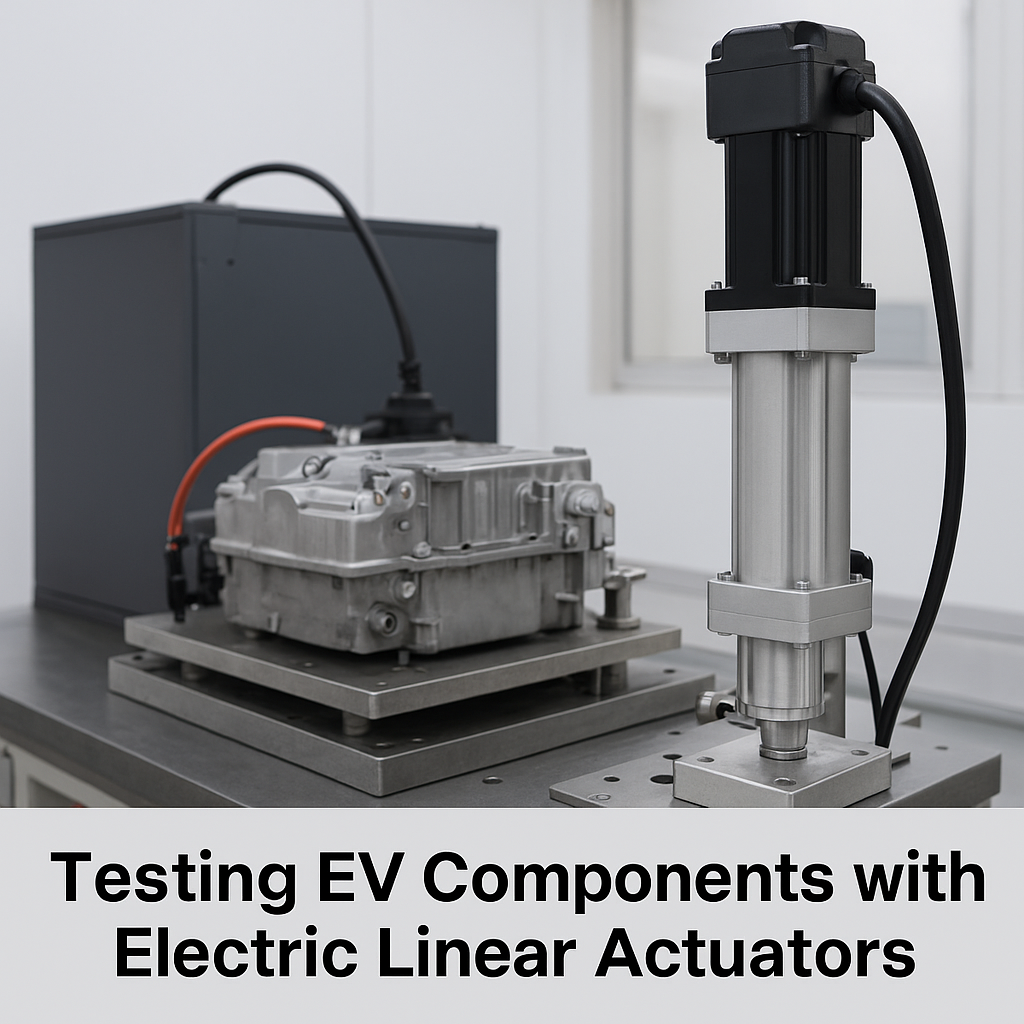
This is where electric linear actuators step in as the unsung heroes of EV component testing.
Imagine a test rig designed for simulating the forces an EV motor might experience over years of use. The actuators provide controlled, repeatable motion that can simulate thousands of cycles without drift. Whether it’s applying consistent pressure to a battery casing or precisely positioning a sensor during calibration, actuators deliver with unmatched precision.
In battery compression testing, for example, actuators replicate the physical stress a battery undergoes in extreme conditions. In motor shaft endurance tests, they move components with exact force and speed, ensuring every measurement is consistent from the first trial to the last.
Compared to hydraulic or pneumatic systems, electric actuators offer clean operation, energy efficiency, and data-friendly integration with automated testing systems. They allow engineers to adjust speed, force, and stroke length digitally, making test setups faster to configure and easier to repeat.
For EV manufacturers and R&D facilities, this translates to shorter development cycles, higher test accuracy, and ultimately, safer vehicles on the road.
In a world where every millimeter matters and every second counts, electric linear actuators are powering the future of EV testing — one precise movement at a time.
Applications in EV Component Testing
Electric actuators are used in a variety of EV test setups, including:
- Battery Compression Testing – Ensuring cell packs can withstand thermal expansion and vibration without structural compromise.
- Connector Durability Testing – Applying controlled insertion and withdrawal forces to check lifespan.
- Motor Assembly Verification – Simulating operational loads to assess performance.
- Charging Port Alignment Tests – Ensuring mechanical fit and operational ease in different conditions.
Advantages Over Traditional Motion Systems
- Energy Efficiency – Operate only when needed, reducing energy waste.
- Compact Design – Ideal for space-constrained test benches.
- Data Integration – Easily interface with test software for live data logging.
- Silent Operation – A quieter lab environment for precision measurements.
A Step Towards EV Reliability
Every tested and verified EV component contributes to safer, longer-lasting, and more efficient electric vehicles. By using electric linear actuators, manufacturers and R&D teams ensure repeatable, controlled, and cost-effective testing. This means shorter development cycles and higher confidence in the final product.
FAQ
1. What is the role of electric linear actuators in EV component testing?
Electric linear actuators provide controlled, repeatable motion to simulate real-world forces on EV components such as batteries, motors, connectors, and charging ports. They ensure accurate positioning, consistent force application, and precise motion cycles, which are essential for validating performance, durability, and safety.
2. Why are electric actuators preferred over hydraulic systems in EV testing?
Electric actuators are cleaner, more energy-efficient, and easier to integrate with digital control systems compared to hydraulic systems. They eliminate oil leaks, reduce maintenance, provide better motion control accuracy, and allow seamless data integration with automated testing software.
3. How are electric linear actuators used in battery compression testing?
In battery compression testing, actuators apply controlled and measurable pressure to simulate thermal expansion, vibration, and mechanical stress. This helps engineers verify that battery packs maintain structural integrity under extreme operating conditions.
4. How do actuators improve accuracy in EV motor endurance testing?
Electric actuators simulate operational loads on motor shafts by applying precise force, speed, and stroke control. Their repeatable motion ensures that every test cycle remains consistent, improving reliability of performance measurements and lifespan predictions.
5. Can electric actuators be integrated with automated EV testing systems?
Yes. Electric linear actuators easily integrate with PLCs, SCADA systems, and industrial automation platforms. They allow digital control of speed, force, and position, while enabling real-time data logging and test result tracking.
6. What advantages do electric actuators offer in connector durability testing?
Electric actuators apply controlled insertion and withdrawal forces during repeated test cycles. This ensures consistent stress levels, helping manufacturers determine connector lifespan, wear resistance, and long-term reliability.
7. How do electric actuators support charging port alignment tests?
Actuators precisely position charging ports and connectors under different environmental or mechanical conditions. This ensures proper alignment, smooth insertion, and reliable electrical contact, improving user experience and safety.
8. Are electric linear actuators energy-efficient for R&D laboratories?
Yes. Unlike hydraulic or pneumatic systems that run continuously, electric actuators operate only when motion is required. This significantly reduces energy consumption, making them cost-effective for continuous testing environments.
9. Why is repeatability important in EV component testing?
Repeatability ensures that test results remain consistent across multiple cycles. Electric actuators minimize drift and variation, allowing engineers to compare data accurately and validate component durability with confidence.
10. How do electric linear actuators contribute to EV safety and reliability?
By enabling precise, controlled, and repeatable testing of critical components such as batteries and motors, electric actuators help identify weaknesses early in development. This leads to safer vehicles, reduced failure rates, and higher customer trust in electric mobility solutions.
0 responses to “Testing EV Components with the Powerful Electric Linear Actuators”