
In early 2022, a mid-sized food packaging company based in Coimbatore faced a common but frustrating problem: their existing pneumatic systems were slowing down production and increasing maintenance costs.
The owner of the company explained,
“We are running 3 packaging lines, but we constantly lose time due to inconsistent motion, compressor issues, and unplanned maintenance. We want a cleaner, more efficient setup.”
That conversation opened the door to a smart solution — electric actuators.
The Problem with Pneumatics
For years, the packaging industry relied heavily on pneumatic cylinders to perform repetitive motion tasks like:
- Pushing filled pouches
- Opening/closing sealing jaws
- Moving conveyors
- Adjusting guides or stoppers
While effective initially, these pneumatic systems came with headaches:
- Need for compressed air
- Frequent air leaks
- Noise and vibration
- Higher energy consumption
- Poor position accuracy
The company was spending lakhs every year just to keep the compressor running and maintain the valves and cylinders.
The Switch to Electric Actuators
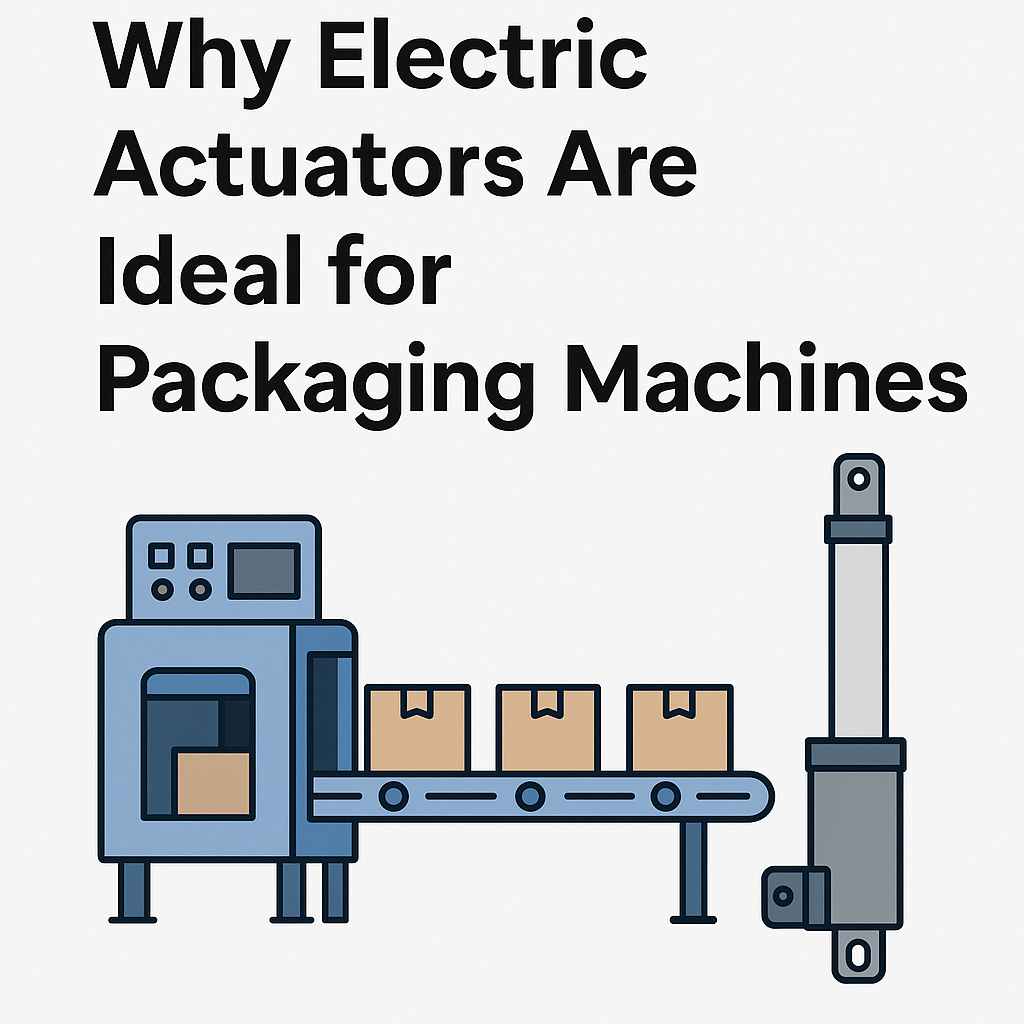
We proposed a pilot project using electric linear actuators for the end-of-line pushing system, where the filled cartons were pushed onto a strapping conveyor.
Instead of a pneumatic pusher, we installed a compact electric actuator (24V DC, 300mm stroke, 1500N force) with a simple control panel. The result?
- No compressor needed
- Precise and repeatable stroke control
- Speed adjustable via potentiometer
- Instant reverse with minimal noise
- Zero air or oil leaks
The packaging line saw zero downtime due to actuator-related issues over the next 3 months.
Benefits They Experienced
After the trial, the company rolled out actuators across all 3 lines. Here’s what they gained:
Energy Savings
No need for air compressors — just plug-and-play 24V or 230V power.
Precise Motion
Actuators moved exactly to the set position every time — improving sealing accuracy.
Clean Operation
Perfect for food packaging – no risk of air or oil contamination.
Easy Maintenance
No valves, no hoses, no filters — just clean electrical motion.
Noise Reduction
Operators noticed the difference immediately — the entire line ran quieter.
Ideal Areas to Use Electric Actuators in Packaging Machines
- Carton pushers
- Bag lifters
- Guide rail positioning
- Flap closers
- Slicing or cutting arms
- Film tensioners
- Tray movers
Whether it’s vertical form-fill-seal machines or horizontal packaging systems — electric actuators can replace pneumatics in almost every motion task.
Final Thoughts
Electric actuators are not just a replacement — they’re an upgrade. For companies looking to improve speed, precision, and cleanliness in packaging, they are a future-ready solution.
As the Coimbatore factory manager later told us:
“We didn’t just remove compressors — we removed daily tension.”
If your packaging line is stuck in air-powered chaos, it’s time to switch to a smarter, cleaner electric drive.
FAQ
1. Can electric actuators replace pneumatic cylinders in packaging machines?
Yes. Electric actuators can replace pneumatic cylinders in most packaging applications such as carton pushing, sealing jaw movement, guide rail adjustment, and flap closing. They provide better position control, lower energy consumption, and eliminate the need for compressed air systems.
2. Are electric actuators more energy efficient than pneumatic systems?
Absolutely. Pneumatic systems require air compressors that run continuously, consuming high electricity. Electric actuators operate only when motion is needed, significantly reducing power usage and lowering monthly energy bills.
3. What are the main problems with pneumatic systems in food packaging?
Common issues include:
- Air leaks
- Compressor breakdowns
- Inconsistent motion
- High maintenance costs
- Noise and vibration
- Poor positioning accuracy
These problems often lead to production downtime and increased operational expenses.
4. Are electric actuators safe for food packaging environments?
Yes. Electric actuators are cleaner because they do not use compressed air or oil, reducing the risk of contamination. They are ideal for food packaging lines where hygiene and precision are critical.
5. What maintenance is required for electric actuators?
Electric actuators require minimal maintenance. Unlike pneumatic systems, there are no hoses, valves, filters, or compressors to service. Routine inspection and occasional lubrication (if required by design) are usually sufficient.
6. Do electric actuators provide better positioning accuracy?
Yes. Electric actuators offer precise and repeatable stroke control. You can set exact positions, adjust speed, and control acceleration, which improves sealing accuracy and reduces product rejection rates.
7. What applications in packaging machines are ideal for electric actuators?
Electric actuators are ideal for:
- Carton pushers
- Bag lifters
- Guide rail positioning
- Flap closers
- Film tensioners
- Tray movers
- Cutting arms
They can be used in both vertical and horizontal packaging systems.
Is it expensive to switch from pneumatics to electric actuators?
The initial investment may be slightly higher, but long-term savings in electricity, maintenance, and downtime make electric actuators more cost-effective. Many companies recover the investment within months due to reduced compressor costs.
Can electric actuators handle heavy loads in packaging lines?
Yes. Electric linear actuators are available in various force capacities (e.g., 1000N, 1500N, 3000N and above). Proper selection based on load and stroke length ensures reliable performance even in heavy-duty applications.
10. How do electric actuators reduce downtime in packaging production?
They eliminate compressor failures, air leak issues, and valve malfunctions. With fewer moving components and controlled motion systems, electric actuators provide stable operation and significantly reduce unexpected breakdowns.
0 responses to “Why Electric Actuators Are important for Packaging Machines”